



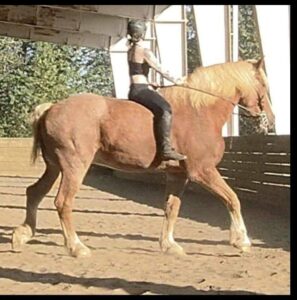
 When schooling a horse, the rider is responsible for setting the horse up to succeed. Don’t ask him for hard things when he’s tired, confused, or upset. Give him generous warm up and cool down time. End on a positive note. When schooling new moves, accept and praise progress rather than insisting on perfection. Listen to him. Give him physical and mental breaks. Reward a good faith try, correct gently, and be patient.
This is just common sense horsemanship. Pester a tired horse for more than he can give or ignore his signals, and he might object dangerously. Expect progress to come too quickly and you could well end up with not only a lack of progress, but also setbacks. Safety and efficiency aside, a patient, considerate, growth mindset is also just what any healthy long-term relationship needs to thrive.
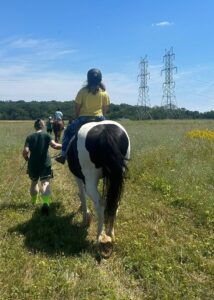 And that objective–a healthy long-term relationship–is more important than any one movement or sequence of jumps.
As I headed into camp week at the barn this year–I made a royal hash out of camp week at my last barn–I tried to treat myself like a horse. What did I need to be set up for success? Well, the obvious thing–rest–was something I could somewhat control. I stuck to a pretty early bedtime, because reveille was at 5:45 am. I did as many morning chores the night before as possible, and I just gave the whole housework thingie a week-long pass (such a sacrifice!). Writing got a pass too, albeit reluctantly (Lord Julian shakes his handsome head and sighs).
I laid in a good store of lunch-able, snackable protein, because the last thing I needed was hypoglycemia making a long, hot day worse. I brought at least a quart of icy watered down ginger ale with me and drank cold water in addition. Heat stress is cumulative. Ask any experienced horse show manager. If the show is three days long, the third day is when all those bullet-proof athletes keel over.
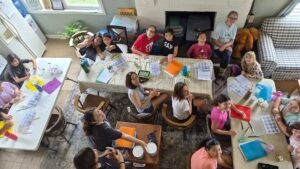 Several times a day, I made myself do the breathe in fast, breathe out slow routine that brings down blood pressure and kicks in the “rest and digest” parasympathetic nervous system. When another volunteer offered to trade my somewhat antsy horse for her steady-Eddy, I accepted the help. I did not want to be the old lady with the torn rotator cuff because, “No, that’s fine. I can handle it.” I’d been handling it for three days at that point.
I gave myself permission to keep to the side of the room during group activities, to take time outs for five minutes’ peace (nods to Mrs. Large).
 So I’m the old lady who for once got strategic about an obstacle course, and managed five pretty demanding days without crying, cursing (out loud), offending my team, or letting down a horse who should have been able to depend on me. I am a little proud of myself, because a year ago, I did not manage a comparable set of challenges well at all, and I wanted to prove to myself that I could, um, get back on the horse.
Have you ever gotten back on the horse? Made yourself go back and get it right, or at least not as wrong the next time? Or have you wisely thrown in the towel when everybody was telling you to try, try again?
PS: Rough draft of the cover for A Gentleman of Very Few Words. Wheee!
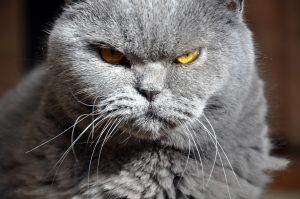 About a year ago, I had a terrible, horrible, awful very bad morning, at the end of a week that included successive days of excessive heat, being physically assaulted by a program participant, crossing swords with several people in quick succession… and at the end of that week, it’s fair to say, I lost my filter. (I posted about it
  I know what caused my lapse of self-restraint–too many stressors piling up at once without enough time to decompress between them. The term trigger-stacking applied. Then I saw and heard a person in authority insulting another volunteer, and… thar she blows!
 I also grow a little heedless when I’m finishing the day with a good book. Yes, I must get up in the morning, and nobody will steal the book if I put it down and get a good night’s sleep. I nevertheless read on, confident that the Disposer of All Events made alarm clocks for people like me, and what’s one more nother-nother scene? I can read the whole book tonight I want to.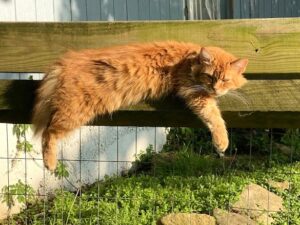
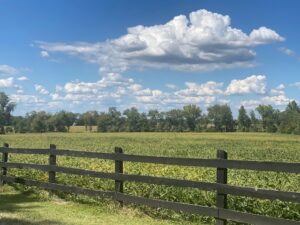 I was stunned by what a different drive it was when I had nothing of any significance on my agenda. Just pretty country roads, the corn coming along (“knee high by the Fourth of July”), the winter wheat ready to come off, the alfalfa looking good… la-la-la-la…
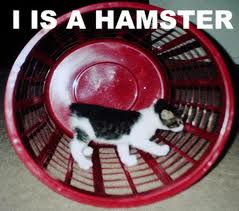 Without breaks, I get to hamster-wheeling, walking in the door and seeing all the chores I skipped to put in a long day in the riding arena. My commutes are full of blurb polishing, dramatic arc plotting, and lesson plan reviews. My writing is not the all absorbing joy I know it can be.
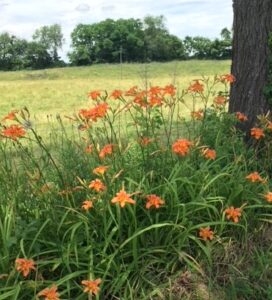 And I am trying on Take a Breather Tuesdays. Might have to shift that around some, but the reality is, if I don’t choose and indulge in a flaps down day, then I end up with days that “get away from me,” scenes I have to chuck or heavily re-write, and a commute spent fretting instead of appreciating nature’s glory.
 There is much I don’t like about summer, most notably bugs and heat. I don’t like that traffic sounds are louder because I generally have all the doors and windows to my house open. Summer is when every Yahoo in their monster pick-up has their music booming so loudly it’s bothersome even when your windows are up and so are theirs.
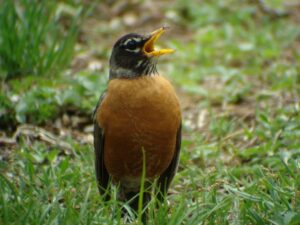 And yet… summer is also when the robins sing. They start around 5 am now, when it’s just getting light, and that sound, of birdsong at dawn, is sweeter to my ears than nearly anything save the laughter of children. Summer is when I can hear the cows across the lane munching grass through the long, mild nights. They are beef cows, so the babies stay with their mamas for months, and this occasions some bovine conversation from time to time, and I like that too.
 kittens playing with each other out on the porch. I hear the skunks who live under the porch arguing with each other, and that is sometimes followed the pungent aroma of a skunk making an emphatic point. I kinda like the smell of skunk, if it’s upwind some.
 If that winter should befall me, the memories of what I love about summer are going to matter much more than all the reasons I can think of to grumble about warm weather. I will need to recall the flowers and forget the weeds, recall the birdies and forget the monster trucks.
 So there I am, tooling past fields of gorgeous first cutting hay, over the creek, around the hedgerow on the way to the therapeutic riding barn. Beautiful day. Warm, sunny, low humidity, great to be alive.
 And then a thought intrudes: So why didn’t you let him know that, Grace Ann? Why not a beep-beep of thanks? A thumbs up out the window? Anything to convey good wishes? Why hoard the fairy dust?
 My thoughts are often congenial, but I don’t verbalize the warm-heartedness. What am I saving it for? My gratitude list? The first of the month? My death bed? I know some of my reticence is because I feel self-conscientious when people compliment me. I don’t know how to respond. I don’t want to brush off good wishes, but nobody owes me a pat on the back for anything, ever.
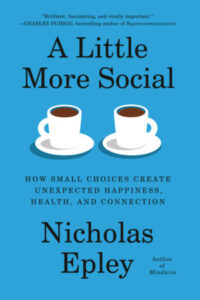 I came across a recent article in the Washington Post about the benefits of talking to strangers (
 I bank, shop for clothes, buy books, watch movies (albeit very rarely), manage continuing professional education, and check books out of the library online. This raises the possibility that it’s not just staring at screens per se that makes them problematic, and it’s not entirely the addictive and toxic design behind a lot of screen environments that causes harm, but rather, the whole issue is compounded by the sheer isolation we’ve traded for all this online “convenience.” (And doom scrolling on social is sold to us as “connection,” of course.)
 I noted elsewhere in this space that I went on weight loss drugs mostly because I wanted to give eighty-year-old me the best shot at life and good health possible. Another decade of obesity was counter that agenda. Eighty-year-old me sometimes chimes in on my financial decisions, too. She will often tell me, “I am glad you put that money in an interest bearing account, kiddo. Inflation is a thing, and I will still need some good chocolate on my grocery list!” She also reminds me, “You can’t take it with you, and that is a worthy cause. Pony up and be grateful you can help.” The old girl speaks her mind.
 moving forward. What a comforting view of matters.
 Fifty-year-old me is agog at having signed her first publishing contract–at fifty! She wanders around grinning and telling me, “The best is yet to be!” Sometimes, I want to smack her, but her joy is so real and she just might be right. The party is far from over.
 I am not one to give up on a book I’m reading, but I recently set aside a biography of Frederick Douglass. It was well written, wonderfully researched, compelling, fascinating, and really, really sad. That guy struggled his whole life for a just cause–struggled to the very limits of his human endurance–and saw only inadequate progress, all but thrown away almost as soon as it was won, and now we’re backsliding on that progress again at warp speed. For my nighty-nighty reading, I am not up to the challenge of absorbing that content.
 Bedtime reading, from the time I was in grade school, has been for detaching from the day, going to a place where justice triumphs, truth and courage carry the day, and love conquers all (by the end of the book). It takes about twenty minutes for a good story to reduce our stress by nearly two thirds, improve our sleep quality, enhance our vocabulary, broaden our capacity for empathy, and fortify the neural wiring that supports our capacity for critical thinking.
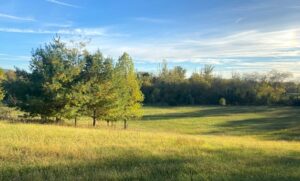 I need to walk where it’s green and growing, in nature, such as old farmland still makes that claim. I found a woods to walk in near the horse barn, and I will be making time to stop there again as the need for shady paths grows in the coming weeks.
 I was at the horse barn this week, taking a mighty steed to his stall after a lesson, and one of the other volunteers mentioned that she was looking for a paying horse barn job. She is mid-twenties, and new to the equine scene, but a quick and enthusiastic learner who has a natural aptitude for working with horses. She was convinced that lack of experience was going to doom her ambitions.
 She just stared at me, and then started to tear up. She’s college-educated but going through that, “Maybe my ladder has been leaning against the wrong building this whole time,” questioning which seems to accompany the quarter-life crisis
 As I was driving home, it occurred to me that my exchange with my barn buddy was a micro-example of qualities I love about my season in life. In earlier years, I might not have been aware enough to realize my fellow volunteer was asking for reassurance in the first place. In the second, I would not have had a ready argument against experience as the sine qua non. Of course, the ideal employee will have some experience, and also an open mind and a willingness to work hard, in addition to a heart for horses, but that wasn’t the point to make at the time.
 I do believe that I am responsible for accepting and managing my feelings. I am responsible for my actions. I am responsible, if I’m miserable, for trying to change that. I type those words, though, from a place of enormous, multi-faceted privilege. I am relatively healthy, I am solvent (finally, for now), I am white, I am single, I am dwelling where the air and water are pretty clean, I was taught to read and write… all good things, but even somebody with all those high cards can get wrapped into an abusive relationship, poverty, disease, or all three at once.
 So, this is me with my nose aflame. I’ve posted a
 the words.