


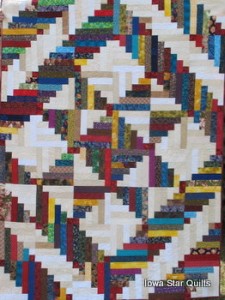
Author Patience Griffin’s “Gandigow Star” quilt
The comments inspired by last week’s post made me sad!
We’ve given up baking, quilting, scuba diving, swimming, gardening, needlework, and who knows what else, all interesting activities in their own rights, and also ways to positively connect with other people. To part with these personal joys hurts, and isolates us from those who shared those pleasures with us.
When I sit on a horse, I am not merely somebody who enjoys riding, I am a rider. It’s an identity and an activity, and that’s what struck me about the losses described in last week’s comments. We part with the identity–scuba diver, swimmer, gardener, quilter–as well as the activity itself, and there’s no memorial service for that cherished part of us that has quietly slipped away.
Perhaps these gloomy thoughts inspired me to realize that becoming a grandmother is also, for me, a loss. As a single mom with one daughter, I was pretty focused on my only child for a big chunk of my adulthood. Since she left home almost twenty years ago, I have remained in her life, a support and a comfort, I hope, even as her adult partners have come and gone. (Some could have gone a lot sooner, if you ask me.)
 Now that she is a mom, I’m bumped down the list of significant people in her life. If she had to vote either me or the baby off the island, I’d be packing my bags. There’s a new kid in town, and he displaces me to some extent, and that’s exactly how it should be.
Rationally, I know motherhood gives me and my daughter something significant in common. I grasp that love doesn’t operate like search engine optimization protocols that rank every hit, and only show the first few. You can love your offspring madly, and have plenty of time and attention to give others in your life, at least some of the time.
But still. A loss.
 So this seemed like a good time to say to my bloggin’ buddies, be you a lurker, a regular, or in between, that I am grateful to have this place to share the occasional thought with you. We might have to give up some roles as life moves us on, or shift the way we inhabit those roles, but the fundamental joy of connection remains available to us. I appreciate the livin’ peedywhaddles out of your willingness to connect with me here, whether you stopped by today for the first time, left a few casual observations, wrote from the heart, or caught a few of my earliest posts more than ten years ago.
 Someday I will have to hang up my spurs, and that will make me sad too, but to know I’m not the only person aging out of a beloved hobby, not the only woman who will miss flower gardening on her knees, is a very great comfort.
Thank you for that, and for all the thoughtful, kind, funny, and inspiring comments you’ve left over the years. I’ve read every one of them, but I’ve never taken the time to say thank you, so I’m saying it now.
Who or what comforts you when life gets to be daunting?
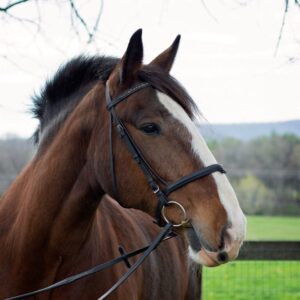 I haven’t been on a horse for about a year, and I was getting that “Now or never,” feeling about climbing back in the saddle. I dislike “slow grief” situations, where you aren’t absolutely certain of a loss, but it’s looking more and more sure as time goes on, but there’s no closure, no ritual, no moment when you can say, “That relationship or role or aspect of my life is gone for good,” except in hindsight.
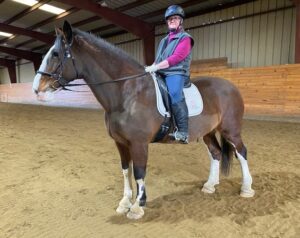 hesitate to ride with him even if he were available. I’m not in shape, and what muscle I had even a year ago has been compromised by weight loss. And the longer I’m away from riding, the more my courage for the sport ebbs. Horses are big, you know…
 The day will come when I will hang up my spurs, but I rejoice greatly to say, today is not that day. The saddle can still be a happy place for me, and my gratitude for that knows no limits. I danced a little nip-up in the barn aisle I was so stupidly happy. Texted my daughter. Cried in the car. I don’t yet have to say, “I was a horse girl.” My paddock boots and helmet are back in the passenger’s seat, and there they will stay for now.
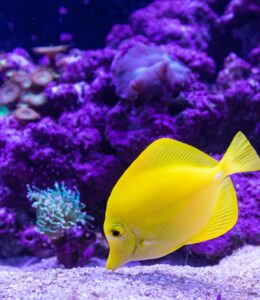 I saw a Facebook post go by celebrating the knock-on effect of dopamine. The syllogism went something like this: I treated myself to a fish tank I could not easily afford, but I just love that fish tank. Every time I see those little fishies swimming in their beautiful little world, I am happy. On the strength of that happy (a dopamine hit), I was motivated to tackle a bunch of other stuff I had been putting off, like organizing my kitchen shelves, because dopamine isn’t just the reward chemical, it’s the motivation chemical. Now I’m going to follow my joy. Pretty soon my house will be clean, I’ll have a savings account, and nothing but blue skies in every direction.
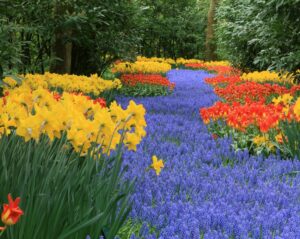 (as did most of their peers), and a father who got a migraine most Sunday nights before starting out the week at a job he was outwardly devoted to. Mom’s housekeeping would be called compulsive by current standards. If business comes before pleasure, when does pleasure ever get a turn?
 And then I thought about how my day begins–with my now famous cup of jasmine green tea laced with manuka honey. I start the day with a treat, and with my treat in hand, I go to the computer and do some writer “work.” I use quotes, because I do love my job, and I would much rather do writer stuff than house work, yard work, marketing stuff (blech), or errands. As a matter of fact, when I started writing for pleasure, my migraines began to wane. Hmm.
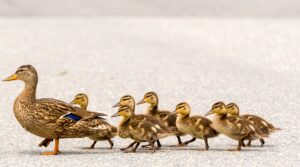 People born toward the bottom of large sibling piles tend to be adaptable, in the sense that they instinctively fill vacant roles in any group situation. If the moment wants levity, they crack a joke. If there’s an invisible elephant in the room, they name it. If the dishes are piling up, they do the dishes. The team is stronger for having such personalities on the roster, and not incidentally, the adaptable party finds a lot of ways to feel useful.
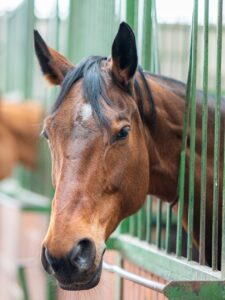 get this participant and their horse into the arena? What can we do now to be pre-ready for the lesson after that?” Maybe critical-path thinking comes from running my own law practice, or years of single-parenting, but I suspect it’s also just me. Vigilant about deploying resources effectively, sometimes to the point of missing the forest as I walk straight into a tree.
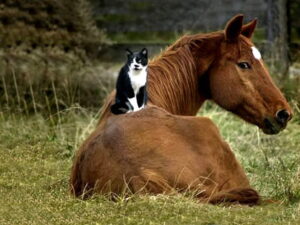 that your approach has a lot to recommend it, but let me give you some context, and another perspective to consider.” She managed to be critical without in any way leaving me feeling diminished or reprimanded.
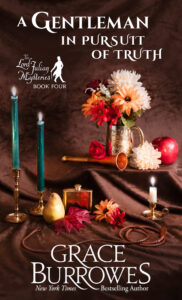 She couched her correction such that I felt valued, appreciated, and supported rather than shamed, and you know what helps me simmer down the very best? Feeling valued, appreciated, and supported, that’s what.
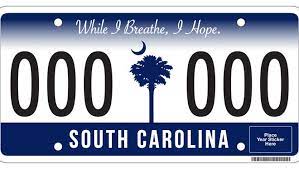 I ended up waiting at a traffic light behind a car with South Carolina plates, and on those plates I read one of the state mottos: While I breathe, I hope. I’d come across that notion in Latin classes, “Dum spiro, spero,” and the sentiment strikes me as something Lord Julian might find useful.
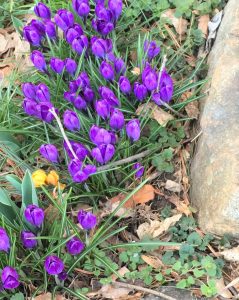 To sustain hope, we need two things: Imagination and a sliver of reality-based encouragement. So what, in these trying times, did I see that gave me hope this week? (Besides crocuses!)
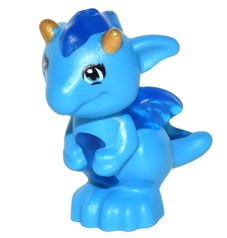 Not these two little guys. They are capable of HOURS of imaginative play. Pirates and dragon-hunters and Lego dragons on the Lego police force, and Play-dough, and on and on. They are perpetual motion machines, and screens in their lives are a controlled rarity permitted only if a parent is watching the same screen. I doubt my great-nephews are all that unusual in having digital native parents who do a better job of managing the various “boob tubes” than the previous generation did. When I hunt a few dragons with these boys, I am filled with optimism (we’re going to make friends with the dragons rather than eat them, according to the expedition leader).
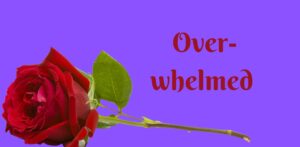
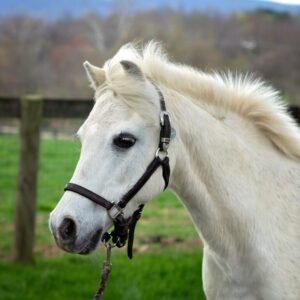 For one of the group classes at the therapeutic riding barn, we start on the ground standing in a circle. Everybody introduces themselves, and chooses a word that encapsulates their state at that moment, and that word goes on a magnetized white board. We have a number of words on magnetized strips–happy, mixed, scattered, angry, et cetera–but any word is fair game for adding to the board.
 This week, I was bustling along the barn aisle with water bottles (each student has their own), when I spotted a stray word on the rubber mat at my feet. “Brave.” Must have fallen off the white board as somebody shuffled it out of the tack room. I picked it up and stuffed it into my pocket. The kids sometimes choose “Brave,” when they’re scheduled for their first ride or coming back after a hiatus. Good word, but my initial reaction was, “Not my word. My life is darned easy, and bravery isn’t much called for.”
 the news might be worse than last time. About how artificial intelligence–built largely on literary and artistic piracy–could well put me out of business as an author, and very soon. About climate change…
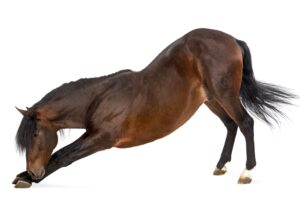 So there I was, maybe twenty years old, sitting on the piano bench at the dance studio where I worked as an accompanist. My usual classes were all ballet, and I played classical music for those. Never have I grown so bored with eight measure phrases (or so good at hacking nearly any piece of repertoire into eights bars). On this particular occasion, I was filling in for the pianist who handled the modern dance classes, and those began not at the barre, but on the floor, with stretching.
 legs. The instructor was right. At that point, I’d been spending four hours a day on the piano bench for years (practicing), and then I’d do more hours for the accompanist gig, or class reunions and wedding receptions. My young adult back was killing me, and stretching helped.
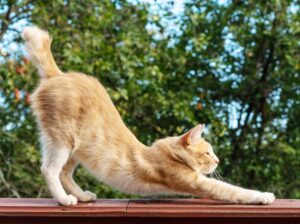 Villains don’t or can’t stretch. They shrink, getting more and more vindictive, greedy, narrow-minded, and selfish as their stories progress, and at some point (I haven’t always done this well), when they are presented with an opportunity to stretch, they refuse the challenge.
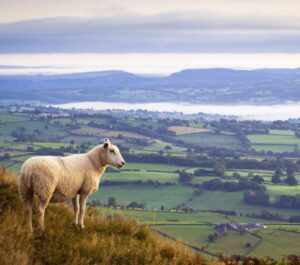 I like writing about Regency England for many reasons, not the least of which is that it was the last period in English history when the majority of the population lived on the land. After 1850, the balance tipped into the cities, despite disastrous results (at least for a time) for many in terms of life expectancy, infant mortality, and standard of living.
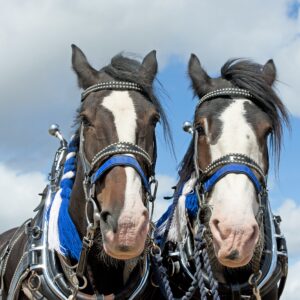 People like Jethro Tull (1674-1741) and Arthur Young (1741-1820) looked at where farming was going well (French and Italian vineyards, and Northern Belgium for example), and where it struggled (much of England), and capitalized on their observations with improved methodology or technology. Tull gets credit for inventing the English version of the seed drill, which planted a seed at the correct depth, and covered it with tilled soil, in easily watered and weeded rows, and for creating a horse-drawn hoe, that aerated soil and dug up weeds.
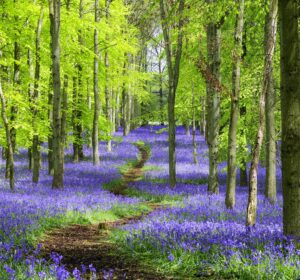 By now you are wondering, “Grace, what are you going on about?”
 That basic idea of crop rotation–change of purpose is refreshing in itself–is central to how I manage my creativity and my life. In this dreary winter month, are there any gardening or farming metaphors that have helped keep you on track or moving forward in the difficult times?
 My maternal grandmother, Mary Scholastica, was of Irish immigrant extraction, and began her married life in a tent at a Colorado mining camp. She gave birth to my Uncle Alan in that same tent nine months later. Mary had been seventeen when her mother died of peritonitis following a burst appendix. Mary’s dad was Leadville’s town doctor, but he was off delivering somebody’s twins when his wife became mortally ill. Such was life, more than a century ago.
 Ina married a Doughboy and ended up widowed with a baby at age nineteen. She married my grandpa next, and they managed pretty well through the Depression, but infidelity and drink took a toll on the union, and Ina ran off with her husband’s brother (my uncle John). She eventually married him and dumped him too (another drinker), and at the age sixty of she opened the candy store that would support her for the final twenty years of her life. She wore faux mink stoles and bright red lipstick, and referred to the contents of her voluminous handbags as her “plunder.”
 In later life, I think about my grandmas a lot. They dwelled in times that were in some ways awful for women (and no picnic for much of anybody). Ina broke a lot of rules, Mary endured all manner of upheaval trying to keep her family thriving during the Depression. Both women had an excellent sense of humor, a lot of pragmatism, and a compassionate view of humanity. The older I get, the more I admire them.
 I’m not a mining engineer’s wife in the wilds of Colorado or a teenage military widow in the Roaring Twenties or anything much very exciting. What I do feel though, knowing that this particular small person is inheriting the world I’ve lived in for decades, is renewed determination that it should be a good world, worthy of him and his confreres. And I promise you this, bloggin’ buddies, that boy will never want for good books, and my first official act as a grandma will be to read him a bedtime story.
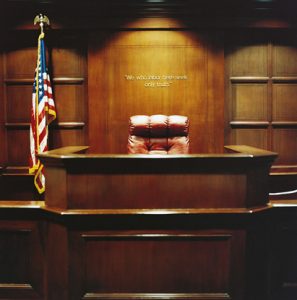 One of the little lectures I used to give myself before court every Thursday was, “Eyes up and soft.” No glowering at the judges, bailiffs, or opposing counsel. No fumbling around, nose in the file, as a child tries to tell me why she doesn’t want a chambers conference with the judge. Eyes up–look where you’re going, Grace Ann, see the world around you–and soft. Not combative or anxious or pre-occupied. Look out upon the world compassionately.
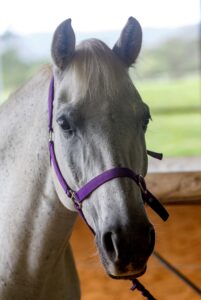 Second, I did something affirmative at a point in the ride where my circuits might be shutting down because “He spooked!” “He’s gonna spook!” (and now that I’ve cued the horse that panic is order,) “He’s gonna spook again!” In court that equated to, “My client is pissed at me!” “The judge is pissed at me!” “Everybody’s pissed at me, and the witness is lying like a rug.” By invoking the eyes-up strategy and taking charge of even my own chin, I move one step back from the anxiety and anger.
 cussing). To ride like this a beautiful super power, one that has saved many an “impossible” horse from a bad fate.