




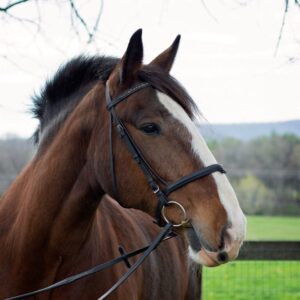
I have been volunteering at Loudon Therapeutic Riding for the past six months, and lately, one question has been dogging me: Why has this place lasted fifty years, and evolved to be one of the premium operations of its kind? What’s going right here? What could other programs be replicating, if they only knew what a difference it would make? I will ask the operations director what she thinks contributes most to the program’s success, (and I wish I could ask the horses).
Horse barns come and go. The business is subject to a thousand whims of fate. Did the hay crop get rained on? Did the tireless schoolmaster gelding take a bad step and now has to be on lay up for six months? Either surprise could affect the bottom line to the tune of thousands of dollars.
 For therapeutic barns, the challenges multiply with significant certification requirements, a unique client population, and enormous funding demands (wheel chair ramps, mats, adaptive equipment, annual trainings…). But somehow, LTR has not only persisted, but thrived.
I am prone to asking what’s wrong. What have I missed? Where did I lose my momentum today? Those kinds of questions have value up to a point–especially when revising a manuscript–but they assume that all problems have solutions, and diligent inquiry will reveal the answers.
And yet, the advice authors hear over and over is not, “Obsess on your flaws and imperfections,” but rather, “Play to your strengths. If you love social media, make that the centerpiece of your marketing footprint. If you are a natural networker, look for  anthologies to join. Focus on what’s working, and do more of that. You will never solve the whole Rubik’s cube, but you can focus on what you do best as an author, and what processes work best for you.”
So my challenge to me, during this most wonderful time of the year (because No Bugs), will be to look for what’s going right, for what pleases me and surprises me in a good way, for what deserves a second look simply because my experience was problem-free or maybe even positive. And then I am going say something–to thank somebody, to offer a compliment, to write a happy little review.
There are enough critics in the world, and my capacity for analytical thinking too often gets fixated on the pea under the mattress. I am asking myself to make the effort to also admire the bed hangings, the comfy pillows, and the lovely quilt going forward, and maybe there won’t BE as many stupid little peas.
 What have you noticed lately going right, being done right, working just as it should or maybe even better?
Lord Julian’s series opener, A Gentleman Fallen on Hard Times, is free in the web store for the whole month of December, as is What a Lady Needs for Christmas. On my Deals page, I also list a half dozen shorter reads (we’re busy, busy, busy these days, I know) that are free and exclusive to the web store.
 The Thanksgiving holiday meant I had a week with no obligations off the property. This hasn’t happened for a while, so I decided to make it a low RPMs week. I’ve done my daily writing sessions (nothing like a
  Compost heap the outdated food gathering dust on the pantry shelves. The raccoons, skunks, groundhogs, and possums don’t know from expiration dates, and the nights are getting chilly.
 I might run out of steam tomorrow, but so far… I am liking this trend, for two reasons. First, I’m happier in my house. I don’t see the dirt the way some people do, but I still live here, and my environment has an impact on my outlook. The endless paw prints, the flying cloves… they take a micro-toll on my energy and joy, and why pay extra tolls?
 To donate fifteen minutes a day to the longer term dignity and peace of my dwelling, to be able to say, “That’s a little better!” about the place where I live, feels good. I am deserving of a pleasant home–everybody is–and taking baby steps to bring that boon closer reminds me that charity begins at home.
 I left the practice of law because a contract I’d held for twenty-five years (representing foster children in my county) was awarded to another vendor who had much higher prices, no experience in my jurisdiction, and no staff in my jurisdiction when all three factors were mandatory bid evaluation criteria.
 When my former husband asked for a divorce, I was sad and bewildered (“Did I do something wrong?” “No.”), but you can’t make another person happy, so best of luck, and off we go.
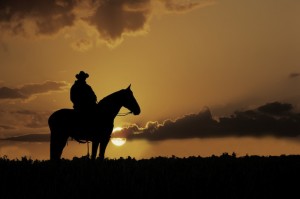
 I did not see getting voted off the horseback riding island coming. I’ve been a lover of horses since childhood. Long before I was a lawyer, musician, writer, or much of anything… I loved horses. I was a horse girl. I am still a horse girl (the only context where I will permit my very adult self to be designated as any sort of girl). I am not done looking for ways to get back in the saddle, but I’m a bit daunted. Not daunted enough to buy another horse (yet), but pretty close.
 When I draft a scene, the initial result is often what writers call, “Talking heads in a white room.” I hear the scene first: What are the characters saying? What are the ambient sounds? Are the birdies tweeting as harbingers of budding attraction, or is conversation impeded by somebody doing a bad job of minor scales on the clarinet two rooms away?
 Setting matters. Setting can be full of micro-symbols (cooing doves), foreshadowing (why minor scales, and is there any sneakier instrument than the clarinet?), or create conflict. Is Lord Hopeless trying to propose while a marching band goes by? Is Miss Villainous pouring lies into Our Hero’s ear in the same beautiful lakeside folly where he first kissed Our Heroine three scenes ago?
 I love to be home. It’s my favorite place in the whole world, though my house is more quirky than lovely. And yet, I rarely get my best writing ideas at home. My happy place for plotting is behind the wheel of my car. I associate my car with safety (hard to flee a natural disaster on foot), mobility, independence, purpose, competence… all good things. I’ve driven every major east-west interstate in the country, and invariably, I did that driving in silence.
 I came across two ideas this week that feel related. First, in the
  One of the casualties of the pandemic for me was my sense of time passing in discreet, orderly units. Days blended into weeks and months, some years went by, and now… I can mostly tell you what day of the week it is, and even get the date right too, but it’s still not automatic, and it should be. It used to be.
 I will think more on this business of shutdown rituals and rest of the year resolutions. Both topics help me focus on being present in the time I have, in the situation I’m in, and that’s generally a good thing.
 I recall being about six weeks into my first full-time post-collegiate job, one that expected unpaid overtime, offered few benefits, and had tons of deadline stress, when it occurred to me, “This is what being grown up means. You work forty hours a week not including the exceedingly tedious commute, and if there’s any energy left over, you do laundry, lug groceries, and clean the nest. Welcome to adulthood?”
 and besides, the bills had to be paid.
 I have always, always loved to write, whether it’s composing an email or writing a twelve book series, but as a young and even middle-aged adult, I ignored what gave me joy, and particularly did not expect to find joy on the job. I’m paying attention to the joy now, by gum, and I am desperately grateful that I can earn my living the way I do.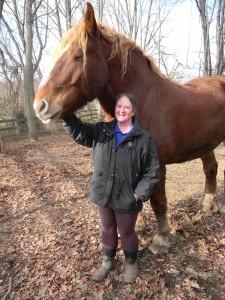
 All that eating means wielding the muck fork and the honey wagon, every day, and then there’s the joy of frozen water pipes, frozen meadow muffins, de-worming, annual shots, the occasional boo-boo or sore hoof, the not so occasional bills, and and and. Add to this the idea that even modestly conscientious horsekeeping means three visits to the barn every day, without fail, and finding horse sitters for vacations or emergencies is mighty hard.
 I told my sister about how delightful I find my fellow volunteers at the therapeutic riding barn. Most of us are old horse girls, no longer riding, though we still love horses and know our way around a stable. We sometimes tell each other the same story more than once, and every few weeks one of us is off to have a knee replaced, to start physical therapy, or to consult with eye specialist.
 Fast forward to the weekly raid on Petsmart, and two young women from my former barn flag me down. We caught up on all the news. Barn manager ridin’ buddy has just committed to getting her horse a custom-made jumping saddle. The investment will be pricey for somebody on a limited income, but it’s much cheaper (and safer!) than trying to train a horse with a sore back. Working Student ridin’ buddy is looking for a horse to lease, a move-up horse who can get her to the next level, but not hold her there when more levels exist to be conquered.
 a master’s in conflict. I could probably be useful to them…” On the one hand, my impulse to be helpful is genuine, and I do like to see organizations and friends (well, almost everybody) thriving.
 My family’s political views range all over the spectrum, from libertarian to liberal, with lots of issue-by-issue gradations in between. I was nonetheless surprised to get into a political discussion over breakfast (while out in Utah) with a brother-in-law with whom I expected to disagree.
 I won the debate both times, which I considered all in good fun–on that issue, at that time, when nobody had any real intention of legalizing pot.
 We found differences in terms of, “So what do we do about these issues?” but we agreed generally on causal factors. Any skilled negotiator will tell you, that agreeing on a mutually acceptable definition of a problem is step one in getting parties to work together to resolve that problem.