





The Big Squee

The 2012 Annual Conference for Romance Writers of America has just wrapped up, and I think it’s pretty much true a good time was had by all. This, to me, is remarkable.

Take 2000-plus, articulate, talented, determined women, put them essentially in competition with each other for very scarce publication resources, add some alcohol (some is a relative term), sleep deprivation, travel hassles, and awards-ceremony tension. Toss in the zipper that sticks just before a pitch session, the room key that won’t work, and the crises at home that MUST pop up when Mom or Wife goes AWOL for more than a day, and…

You get one of the nicest gatherings of any professional association I’ve ever attended. I put off attending any writers’ conference at all until I had nearly two dozen completed manuscripts. I dreaded giving up any of my precious unstructured time to a gathering I was certain would be a cross between Survivor and Sorority Carnivores From Outer Space.

I could not have been more wrong. Maybe I’ve spent too much time around litigating attorneys, maybe I don’t understand my own gender; more likely, romance writers are a culture unique on the planet. They believe in true love, they believe the big prize is a chance to live a life based on honor and integrity, they believe in an abundant universe despite any and all evidence to the contrary.

I was nominated for a RITA award this year, which went to the very talented and gracious Tessa Dare. She deserves it–she deserves several RITAs, come to that–but being nominated made me ponder what I’d say to my professional community if I had their attention for ninety seconds.
I’d say what every award winner said when it was her turn in the spotlight: Thank you. Thank you for being such a supportive, adult, generous, constructive group of people. Thank you for offering a sense of community, regardless of our differences. Thank you for writing all those wonderful books, because the world needs happily ever  afters and the people who believe in them.

OK. Now, over to you. You have the microphone, the spotlight’s on you. If you could tell your immediate community anything, if you could focus their attention in any direction, what would you say?

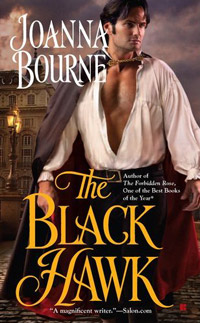
To one commenter, I’ll send a signed copy of Joanna Bourne’s RITA award winning historical romance, The Black Hawk.

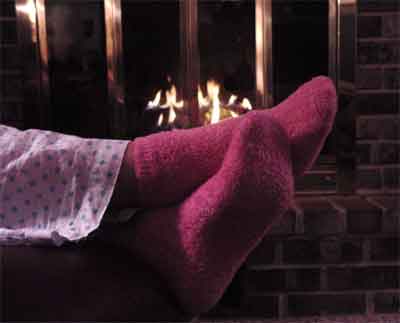
 

The Right Comforts

Thursday is the apex of my work week stress curve. I sit in court all day and represent children in abuse and neglect proceedings. The subject matter, even after twenty years in the business, is stressful—for me and for the parties, certainly, but also for the other attorneys, the courtroom staff, the social workers, and most especially for the judge.

This week we had a blue light special on Upset Teenagers. Seems every time I picked up the phone it was another, “Miss Grace, you have to get me outta here…” Sometimes, the clients are upset because their mom and dad won’t Parent Up, sometimes they’re upset because the social worker has dropped the ball (one of at least twenty he or she is expected to juggle) and sometimes—these are the most upset kids—they’re upset because they’ve screwed up again, and they figure if they pitch a loud enough tantrum, somebody will focus on placating the tantrum rather than holding the kid accountable for bad choices and worse behavior.

My clients are not dumb, nor do they lack for determination. Even in a tough week, I admire my clients immensely.

Part of what makes child welfare law so difficult is that often, all of the options before the judge have significant risks and downsides, and nobody hands out crystal balls with those black judicial robes. My clients have run off and come to bad ends, they’ve been sent home (where they begged to go) only to see Mom or Dad come to a bad end.

Probably more than you wanted to know, and not the point of this diatribe.

The point is, when I get home on Thursday nights, I want to be the baby. I do not want my dial set to “give,” I want it set to “regain my balance.” To this end, I try to arrange matters so I never have to stop for groceries on Thursday evening, never have to put gas in the tank, never have to socialize. I come straight home, where I proceed to…

Make a big pot of decaf Constant Comment or Lemon Lift tea.

Divest myself of all courtroom attire and slip in to my play clothes.

(Play clothes includes fuzzy socks. Must have thick, warm fuzzy socks. Must.)

Light my Midnight Jasmine candle, burn a couple sticks of cedar incense.

Make a PBJ for dinner, or whatever I want for dinner, but I can promise you, it won’t involve cooking or cleaning up.

Develop a case of temporary blindness about dust bunnies, sticky counters, or gritty floors. All that stuff will be there tomorrow—nobody will steal my housework.

Fuss around on the computer but without any assigned task, not even re-reading whatever I might have written that morning before heading off to work.

In short, I get absolutely unstructured time for a few hours each week. I’ll take a keeper read to bed with me—an old friend guaranteed not to disappoint—and for Friday morning I generally don’t set the alarm.

I need this ritual to decompress, and it has taken me years to stumble on what works for me in terms of processing the week and regaining my balance. Some of what I do to cope has symbolic significance (changing my clothes), and some is just for animal comfort.

But I am not the only person with a job that sometimes gets to me. We’ve all come across small comforts, little gestures and routines that take us in the direction of self-nurture and comfort.

Care to share some of yours?

The Right Words

When romance writers are looking around for inspiration, we frequently look no further than the poets. Poetry uses 100 words to say what we take 400 pages to approximate. Poets wrestle the universe for each word, each line, each couplet, while we careen about with chapters and scenes and trilogies.

It isn’t my gift to write poetry, though I’ve taken a few stabs at it. My favorite volume of poetry is, “Sleeping Preacher,” by Julia Kasdorf. Julia was raised “plain coat” Mennonite, and this volume of her poems reflects that perspective, for both good and ill.

I turned to poetry for the sixth book in the Windham series, which features Lady Louisa Windham and Sir Joseph Carrington, her “Christmas knight.” Joseph is plainspoken, a gentleman farmer without pretenses or presumptions and yet, he adores Louisa and sees her for the complicated, brilliant, passionate woman she is.

On their wedding night, Joseph does not tell Louisa he loves her. Eventually he does (of course he does), but early in the relationship he will not allow himself to burden her with his maudlin sentiment. In the dark, holding his wife in his arms, he recites her a poem instead:


To His Mistress by John Wilmot, Earl of Rochester


Why dost thou shade thy lovely face? Oh why

Does that eclipsing hand of thine deny

The sunshine of the Sun’s enlivening eye?


Without thy light what light remains to me?

Thou art my life, my way, my light’s in thee;

I love, I move, and by thy beams I see.


Thou art my life—and if thou but turn away

My life’s a thousand deaths. Thou art my way—

Without thee, Love, I travel not but stray.


My light thou art—without thy glorious sight

My eyes are darken’d with eternal night.

My Love, thou art my way, my life, my light.


Louisa is helplessly smitten, though she doesn’t say she loves him either—yet.

Has anyone read poetry to you? Has anyone given you a book of poetry that you’ve treasured all the years since? Are there a couple lines of poetry you’d have to work into any romance with your name on it? Valentine’s Day is coming—let’s hear a few titles, maybe a few lines of your favorites.

The Right Moves

I married a genuinely nice guy. Former Spouse had a few quirks, like needing to go to the gym almost every day for hours no matter what, running great distances regularly “for the fun of it,” and needing to eat his oranges standing at the kitchen sink—nowhere else.

And yet he had some moves, some small traits that won my heart. Without being told, he figured out how to fix my tea exactly the way I like it, and he’d occasionally bring me a cup without my having to ask.

He held doors for me, and always opened my car door before he went around to the other side and climbed in.

If he was meeting me among a group of our friends, he’d walk into the room, look me right in the eye, and say, “Hello, Gorgeous,” then come kiss me before he said hello to anybody else. The other ladies in the room would sigh audibly. The other fellows would wish they’d thought of that.

He could tell when I had a headache just by looking at me, He said it was something in my eyes that gave it away. My own parents never picked up on this, neither did my offspring.

These are the behaviors of a fellow who notices his lady, who observes her and processes what his senses are telling him about her, and then he goes one step further and acts on the information in a caring way. And note well, it doesn’t cost a lot of money to walk into a room, make a beeline for your beloved, and acknowledge him or her with open affection first, before you start working the crowd.

It costs nothing to figure out how a lady likes her tea. It costs nothing to hold doors for her. It doesn’t take great intelligence, it doesn’t take youthful stamina or great moves in bed.

To me, this is one essential presentation of romantic love—small things redolent of insight and caring. Things I hoard up when I come across them so I might imbue my fictional heroes with these traits.

So… how did you know your sig other was a keeper? Or with the ones that got away (or were tossed back) what little things did they do that make you smile at their memory?

And watch out how you answer, because if it’s really, really sweet, tender or clever, it might end up in the pages of one of my books!

Be Angry and Skim Not

Once upon an earlier time, I took an interest in Family Systems Theory. How do families work and what happens when they don’t? How are families the same from culture to culture, how are they different? The topic is absorbing, and even if you started life in a basket surrounded by wolves on a hillside, you have issues about family (or the lack thereof).

In the middle of this preoccupation, I also took an interest in the emotion of anger, partly for its universality. In every culture, there are expressions of anger, some subtle, some violent, some humorous and everything in between. Then too, anger is a handy tool. It connects us and distances us at the same time. The object of your anger, be it a person, ideology, trauma, or parking ticket, exerts great sway over you, even as you wrap yourself up in the righteous conviction that you would NEVER pass a law that lame, act like such a jerk, or otherwise resemble the object of your ire in any way whatsoever.

Some people excel at using anger as fuel. They steam around on the strength of resentments, old wounds, and seething fantasies of revenge and power. Take their anger away and their identities would collapse—countries can function this way too, of course. If you don’t know what you stand for, you can generally avoid the hard, scary work of figuring it your identity by making a loud, messy business out what you’re know you’re against.

Personally, I’m not on keen on carrying around a lot of anger, though I understand it’s a useful emotion if properly dealt with. When I feel it getting a grip on me, I try to find some micro ritual for getting off the anger hamster wheel. A good book can figure prominently in that process, but so can cleaning off my desk, taking a load of novels to the women’s jail, talking to a good friend, or journaling.

As a writer, though, anger for my characters is good stuff—not because it leads to fight scenes. Oddly enough, as author and literary agent Donald Maass has pointed out, fight scenes (like intimate scenes) can be down right skip-able, particularly if they’re all action and no empathy. (For that and other brilliant writing insights, check out his “Writing the Breakout Novel” series.)

What I like about anger as an author, and have come to respect about it as a human, is that it generally disguises some more complicated emotion. The villain is angry at the hero, but if that villain is going to pull his share of the dramatic load, then as an author you’ll reveal that hurt, loss, powerlessness, and family honor (and perhaps a hint of egomania) are all fueling the Bad Guy’s dastardly plot.

Generally, if a character is acting, speaking, or reflecting angrily, we’ll soon catch a glimpse of shame, fear, exhaustion, bewilderment, or a more humanizing emotion at work. If the Regency heroine is ready to wallop the hero’s cheek for challenging some drunken lout to a duel over her honor, behind her fuming about men’s crack-brained arrogance, you will soon sense that she’s scared not of the ensuing scandal, but of losing her beloved.

Anger for the novelist points the way to the emotional minefields that make books so interesting to write—and hopefully to read.

Was there a time though, when you read a character who was angry, angry, angry, and that character just didn’t work for you? If so, was it because the underlying emotion never quite saw the light of day, or was there another writing flaw at work?

Plugging Into My Outlet

There I was, sharing a cup of hot chocolate at Panera with my friend Graham, relating the challenges a published author faces—I was not whining—when he casually observed, “You need an outlet.”

I hopped into the Wonder Tundra and drove to California and back a couple weeks ago, with his advice ringing in my ears. What did he mean? Six thousand miles later, I have a Clue.

Once upon a time, I was an aspiring musician. I wallowed in music and got a sense of competence and confidence from my increasing skill, and a lot of joy from indulging a personal passion. Then I started supporting myself with my music, and… the game changed. I had to worry about what to play for this ballet class or that class reunion, I had to chop down some repertoire to fit into perfect eight measure phrases, I had to simplify pieces to be able to handle them up tempo, and so on.

Love became tempered by the need to eat.

When I became a mother, I adored my newborn child and got up five times a night to tend to her smallest whimper, and I delighted in doing so. A few years later, love had to be tempered with boundaries, or nobody in the house was going to be functional for very long.

When I rode horses, I did so out of sheer love for the beast, and the saddle was my happy place. I again enjoyed a sense of competence and confidence from growing (though never very impressive) skill, and when I was on my horse, the big, bad world, with its unfairness and bigotry, violence and injustice, did not touch me. I cannot afford to ride like that any more, so alas, that happy place went on hiatus.

But I still had the writing… another happy place, where for hours at a time, I could fashion worthy characters, big challenges, and a reliable Happily Ever After, which I badly needed after a day in court.

Except the writing now has to be tempered too. I need a little thicker skin for when reviews that are not just critical, but downright mean, come raining down on my parade. I need discipline, because deadlines wait for nobody’s mojo. I need marketing savvy, because the publishing industry isn’t merely changing, it’s in outright revolution. The sense of growing confidence and competence I had as an aspiring writer is tempered with caution and humility. Nobody gets published without an entire village behind them, even if it’s the publisher’s village on salary whom you never get to meet face to face.

So…tempering makes things stronger, and I hope as a writer I’m being tempered by wisdom and experience.

And yet, Graham was absolutely right: I need an outlet. A place I go to out of sheer love for the things I can do and experience there. A place free of judgment, and full of good will and the pleasure of growing skill. Maybe I’ll take up knitting, maybe I’ll write some nonfiction, maybe I’ll join… a book club (do not laugh, please).

Or maybe—radical thought!—I’ll open the lid of the piano that has sat silently in my living room for ten years.

What about you? Where’s your happy place, and how did you find it?

Why Do You Women Read That Stuff?

I had dinner with a good friend the other night, and in the course of the conversation, the question came up that blights many an otherwise sanguine exchange with a romance aficionado: Why do you women read that stuff?

What he was asking, though, was: Why do you women write that stuff? There are as many answers as there are authors, or readers, but this was a guy, a spectacularly nice guy, but a guy just the same, and I think what he was trying to find out was what I hope to accomplish by putting my books out in the world for purchase.

Or to put  it in guy-speak: What is that stuff supposed to do?

One answer that came to my mind (later, of course) was: Romance is an antidote to cable news.

We’re taught from little up that it’s a privilege to participate in a democracy, and many people around the globe throughout history haven’t had the freedoms we do. With the freedoms, and representative government, goes an obligation to remain informed about what our society is up to, and to contribute knowledgeably to the decisions it makes. This duty to remain informed has been parlayed by some, or constricted by market forces, into a presentation of the nightly news that grabs the viewer’s attention, chokes it viciously about the neck, and flings it thoroughly overwhelmed and wrung out into the corner at the end of 48 minutes of programming, and twelve equally predatory minutes of advertisements.

And what do those 48 minutes consist of?

A race among the horsemen of the Apocalypse for top story. A tour de force of misery and mayhem, and we’re told this is what it’s important to know about the world around us (though I suspect, these are the stories most likely to raise viewers for the advertised products which now support the entire journalistic endeavor—alas for the fourth estate). Yes, there are journalists who focus on the positive, occasionally, and there are human interest stories, but when are they ever at the top of the hour?

Romance, to me, is about the belief that if you love yourself and others with integrity, if you take responsibility for your personal growth and maturation, your relationships will be healthy, and your life will be blessed with love. This is a hopeful outlook, not always easy to maintain. There are big black moments in life, and they’re hard as hell.

When I face them, I do not want to be pounded with all the times my species has failed this very day to meet the challenges of living together with respect and cooperation. I want to be reminded that love does conquer all, human kindness is a quiet and powerful tide all around me, and the path of life need not be lonely even at its narrowest points.
It is important to be informed regarding current events; it’s more important to be reminded of the eternal verities.

Writing a Resurrected Dream

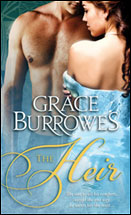
 My editor once observed that the heroes of my first three books are “so different.” Gayle Windham, The Earl of Westhaven, from “The Heir,” is a studious fellow with a legal bent, a man comfortable with management and the complexities of business. His older half-brother, Devlin St. Just, from “The Soldier,” excels at the equestrian arts, has little use for polite society, and loves the scent of freshly baked bread. Rounding out the trio is Valentine Windham, who by virtue of obsessive focus has perfected musical skill to the point where his book is titled, “The Virtuoso.”

At first I considered that their individual traits were simply large-family dynamics at work, where differentiation occurs because (in my opinion) parents can’t focus as closely on eight separate children the way they can one. Then too, if a child is competing for scarce parental attention, the child is more likely to hone individual strengths and even capitalize on weaknesses, the better to stand out from the crowd.

Then I looked more closely at the heroes I’d written: A consummate manager, a consummate equestrian, a consummate musician. Heaven help me, I’d written into these men three of the largest dreams I did not make come true for myself.

When I started law school, I worked for Fortune 100 firms as a contract administrator. I negotiated deals with the federal government, oversaw subcontracts in the tens of millions of dollars, and generally wallowed in commerce—only to find I stank of corporate endeavors, and it was not a pleasant scent to wear eighteen hours a day.

Before that, I’d wallowed in music. My friends were musicians, my profession was music, my academic focus was music, and my recreation was music. I was playing catch up, though, because as intuitive as my grasp of music theory was, as much as I loved music, I was a lousy performer who’d gotten a late start with my instrument. I saw a lifetime of feeling inadequate stretching before me as a musician, and I headed off to law school instead.

And the horses? I love horses, but again, my love does not equate to proficiency in the saddle. I thought I’d contribute something to the sport by managing recognized equestrian competitions. I was good enough at it, but the job was thankless, full of liability, and without remuneration. I have managed my last horse show.

I still own horses, I still have a piano, and I still run my little law practice. My musical, business and equestrian dreams did not come true, though. I’d thought I chosen different roads in the yellow wood, and set aside the dreams I’d originally envisioned. Now I find those dreams served one more purpose by defining the heroes of my first three books. Their Graces have eight surviving children, and I’m looking forward to finding more resurrected dreams in their books.

What about you? Have you set aside dreams, only to find them back in your life in some altered, more enjoyable form?

To one of this week’s blog commenters, I’ll be giving away a signed copy of “The Virtuoso.”

On the Shoulders of Giantesses

Sir Isaac Newton said, “If I have seen farther, it is by standing on the shoulders of Giants.” (letter to Robert Hooke, February 5, 1675-76). I haven’t read romance for almost forty years without coming across some giants, or giantesses, as the case may be.

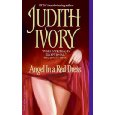
The first was Judith Ivory, then writing as Judy Cuevas. I was at the end of a miserable pregnancy, on complete bed rest, in bed on my left side, trapped in a little apartment with My Mother the Registered Nurse, and scared to death of impending motherhood. Into this slough of despond dropped a little book called, “Starlit Surrender,” an earlier incarnation of “Angel in a Red Dress.”

I devoured it, and for the first time in my reading experience, went right back to the start and devoured it all over, right then and there. It is my all time, best ever, favorite book. Drug addiction, divorce, intrigue all in a historical package (Georgian, technically, though the feel is Regency). And the writing—sumptuous, glorious, wonderful writing, and she does it in every one of her books. If ever there was an author whom I wish were more prolific, it is she.

Then there’s Mary Balogh, author of one of this year’s Publishers Weekly Best Romances, “The Secret Mistress.”  A big portion of my keeper shelf is Mary Balogh, with the Simply’s having pride of place. And the whole time I’m reading her books, in the back of my mind, I wonder, “Is it because she’s Welsh that the language is just so exactly right? Does Welsh origin give one a spectacular touch with sexual tension? ARGH. How does she do this?” (And when can I start dating Welshmen?) I buy Mary Balogh hardbacks the day they come out, without reading the flap. Have to have them. And when I go to heaven, Bewcastle is going to give me that smile that’s worth waiting three hundred pages to see. He is.

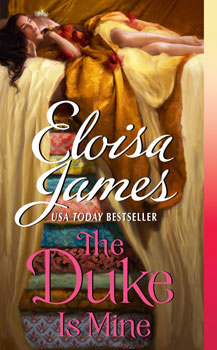
Eloisa James is another must have. She has the knack of sketching a character’s internal landscape in little, deft strokes, even as the overall image emerges lush, nuanced, and perfectly meshing with the other characters. I could eat these books up with spoon. And I heard her speak at a national conference. For the words, “Love heals shame,” I will dwell eternally in her debt.

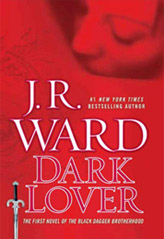
J.R. Ward, for many, many reasons is on this list too. I think she more than any other author has hit the nerve of men’s loneliness for each other, of their need for fathering, and brothering, and purpose shared with other men. This is touching stuff, occasionally profound, and it requires a very confident, daring hand. When it’s wrapped up in paranormal creativity, vampire libido, and alpha-dawg dialogue, it’s irresistible. I periodically read through the whole Black Dagger Brotherhood series from start to finish.

There are many other authors about whom I will gush at another time–Joanne Bourne, Carolyn Jewel, Loretta Chase, Meredith Duran, Julie Anne Long, Jennifer Ashely, to name a few. These are some of the ladies who are mega-vitamins to my motivation. For me, their books function just as effectively as pharmaceutical stimulants, (about which, more later), and you can’t overdose on them. To these writers, I cannot offer enough thanks. If I never put fingers to keyboard in pursuit of publication, I would still owe these women for the relief from loneliness, boredom, fatigue, and frustration their works have given me.

It’s a wonderful world when for just a few bucks you can stand on the shoulders of giantesses such as these, again and again and again. Now, if you will excuse me, my keeper shelf is calling me, and not even for a hot Welshman will I ignore that.

So whose shoulders do you like to stand on, hmm?


In Honor of The Soldiers

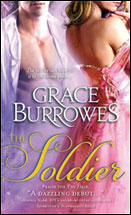
The Soldier” is dedicated to my oldest brother, John, who is a soldier in the best sense of the word, and to all the soldiers in uniform and otherwise who find the road to peace an uphill battle. Your sacrifice is not in vain.

Thus opens the book that tells the tale of Devlin St. Just’s fight for his happily ever after following the Napoleonic wars, but when I think about it,  is the road to peace ever not an uphill battle?

And what is a “soldier in the best sense”? By that I meant, somebody whose passion to protect the people they love is so great, they will offer their lives in the effort. This is the stuff of heroes, certainly, but in my work with foster children, I also see a much quieter version of soldier than we usually envision when we think of a hero. I see people who each day offer their lives and their love in the fight to reclaim families from the sundering forces of addiction, mental illness, and crime.

I see parents who finally, finally climb on top of years of excuses, blaming and denying to get healthy and sober, and to step up to the challenge and honor of raising their children.

I see children who by rights ought to be incapable of functioning, though they somehow hold it together, get an education, and make good choices.

I see the police officers whose job it is to accompany child protective services workers into dangerous and heartbreaking situations, and they do it. It’s part of the job, and they don’t expect to be thanked for it any more than the CPS workers expect thanks for what they do, or the judges expect thanks for hearing the difficult cases in the foster care court room.

My ninety-one-year-old dad served a Navy tour during World War II, my brother John did a stint in Vietnam, but they rarely talk about their experiences as soldiers. Today, let’s talk about our soldiers—who in your life is protecting and serving, offering their life and their love for what they believe in? Whether they’re in the military, or serving in a civilian capacity, they’re soldiers to me.

Eleven people commenting on today’s blog will receive a signed copy of “The Soldier,” and one lucky commenter will receive a new Kindle.