





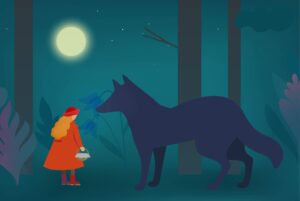
 I tend to be hyper-vigilant, which is characteristic of people who did not have critical needs met in childhood. We’re always watching, always looking for the next source of trouble. I would not say I qualify for PTSD honors–I was mostly safe as a kid, I just didn’t feel safe–but I’m a standard deviation or two from the mean when it comes to scanning the horizon and watching the sky.
I am also fretful, though again, according to ye old DSM, I’m not quite into the OCD zone. My mental wheels get spinning, and on a good day, this means I have scenes to write. On the other days… how many ways can the world come to an end? Can my world come to an end? Lots and lots.
 I was afraid of the dark from as far back as I can remember. Terrified to the point of wetting my bed rather than crossing the room to turn on a light switch. In early adulthood, I feared I would never pass the bar when I had a baby to support and all those loans to pay back.
I was afraid my daughter would be taken from me (talk about vicarious anxiety, Madame Child Welfare Attorney). Afraid I’d be so destitute, I’d have to go live with my folks, who’d retired to a location I abhorred. Afraid I’d be disbarred and tossed in jail for incompetent lawyering. Afraid I will end up wearing all the clothes I own, guarding a rusty shopping cart full of sodden books down along the highway, my pets all confiscated by the authorities, and an empty tin cup in my hand.
 My fears are rooted in reality. Every parent has bad moments. The recession hit my finances very hard. My lawyering was imperfect at times, and destitution and homelessness in old age are happening with increasing frequency. Some of my fears were more justified than others, some more rational than others, but they had a hold on me either way.
Compared to people living in Gaza, Afghanistan, Sudan, Ukraine, Rwanda, and many other violence-saturated locations, my fears are laughable. Compared to people living with cancer, same. Compared to people whose children have been taken by the authorities, same again. I am a mere tadpole in the Coping With Fear waters, while others have had to grow their courage to leviathan proportions. I hope I am never called upon to join their ranks.
 But if I am challenged to be braver, I have a place to start. I am no longer afraid of the dark (most nights). I have had to make some hard decisions to get through hard times (waves to the sainted memory of Delray the Wonder Pony). I have been broken-hearted, broke, and broken, and yet, here I am with all my dings and dents, still mostly enjoying life (most days). I have some courage. I have love. If owning a copy of Darius become a criminal offense, well, so be it. I might be facing my first rodeo, but not my first ride. I will trot around until I find a light switch or two, even if it scares me to initiate the search.
What makes you brave?
 My daughter’s birthday has come and gone once again, and a happy birthday it was too! The anniversary of her arrival, full of wondrous memories, often turns me up thoughtful and this year was no exception.
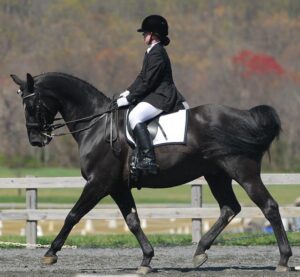 I kept the baby, but have often doubted the decision. If you want to wreck a kid, the process is simple: Take dad away. Every bad outcome that can befall a child becomes MUCH more likely if dad is not in the picture (especially for boys). My daughter’s dad took himself out of the picture very early in her life (he tells a different story).
 Anyhoo, I doubted my decision, all the while appreciating that I lived in a society where I had options. The road I chose was hard on my daughter (see above), and I regret that. A lot. I should have moved closer to family, I should have found better daycare, I should have set firmer boundaries, whatever, whatever, whatever.
 This is another gift that results from remaining on the planet after the bright and bold years have passed (though I hope bright and bold moments yet remain to me). Belated hindsight can be kind and even revelatory. I did the best I could, doubts and all, and maybe that was even better than I knew.
 I stand by every word of
  To say I was overwhelmed is to make the grandmama of all understatements, and I’m feeling a little bit of that same out-of-breath, can’t think, too seized-up to scream overwhelm lately. The news is part of it, but so are publishing deadlines, technical challenges (formatting in Italian!?), physical limitations, and tax season exercises.
 Second priority: Delegate, reschedule, prioritize. Do not abdicate control. With respect to the news, that means I focus on a few trusted commentators to analyze the blizzard and report the facts. NEVER let the news into the beginning or the end of my day. Sniff through it in the middle of the day, after I’ve tended to what’s important, before my mental energy ebbs for the night. For the doc appointments, that means see ya in late March and not before.
 There are other steps I take when I’m in my emotional bunker. I lower my standards, to be honest, and look for progress rather than accomplishments. So I didn’t get Lord Julian Nine done and dusted by Ground Hog Day. Welp, did I write 500 words today? Did I pay the bills on time? Am I pulling my share of the load at the barn? All good, all sufficient unto a long and wearying day.
 In the past year I’ve lost a tooth, some muscle mass, several pairs of reading glasses, and two gloves from two different sets of gloves, the right glove in both cases…. among other things. The upper frequency range of my hearing is getting a bit dodgy, and I have absolutely parted ways with what little interest I ever had in social media.
 will do what I can to support the people and values I believe in, but it’s time for bed now, and Loretta Chase has a new
  almost never a bad idea, thank you (even if they have raisins, coconut, and almonds in them, which some people must like because look at all those recipes, really).
 I recently did a presentation for other writers on the use of child characters in adult fiction. At one point I found myself passing along the following observation: Underdogs tend to be far more knowledgeable about overdogs than conversely. Ask a kid to imitate a parent, and you will get the impersonation to the life, right down to intonation, word choice, and gestures.
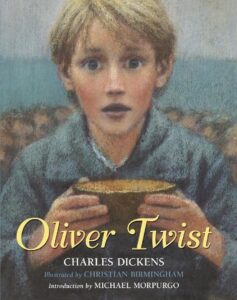 I think this is part of the appeal of the child character. An Atticus or Winnie or Rose is keeping closer watch on the adult cast of a book than the reader is. When Atticus is being chastised for disobedience, he can retort that Julian disobeyed orders himself–of course, he did–when another adult would hesitate to point that out, if they even made the connection. Atticus was probably ahead of most readers when he came out with that argument, but to a child, keeping track of who obeys and who disobeys is not a detail.
 I recently visited my daughter and grandson in Portland, OR, and oh, by the way, a granddaughter is expected in May. I looked around Portland wondering, “Could I be happy here?” A merely hypothetical question, of course.
 But Portland? While visiting, I tooled up the Columbia River Gorge to meet my younger brother for a pizza in Arlington. (TERRIFIC FOOD at the Big River Pizza and Grill. The grilled cinnamon roll ought to be illegal.) The scenery along the river is mile after mile of breathtaking, and there’s Mt. Hood popping up around every third bend. Talk about big trees…
 I love my little place in Maryland, but I wouldn’t advise anybody to move there. In my county, the safety net is nearly non-existent, social trust is quite low, environmental awareness is suspect, and if I wanted to recycle anything, I’d have to drive fifteen miles one way to one of very few locations accepting recyclables and pay for a permit patronize the facility.
 I’ve added another step to my end of day list of gratitudes. I still list five things I’m grateful for unique to that day, but then I ask myself: What went right? Sometimes, there’s overlap. The store had all the stuff I needed, I could afford to buy what I needed, and so forth. But sometimes, “What Went Right?” sends me thinking in a slightly different direction.
 I am focusing on this question for two reasons. First, because it popped up as part of my certified therapeutic riding instructor training. My mentor asked me, after one of my less inspired efforts to teach, what in the lesson had gone right. I had to search and sort for the longest time, but so much had gone right–no tears, no falls, no tantrums, no horses going lame, some fun, some learning, some enjoyable exercise. But I stared at the floor and had to have a big think before I could get out of What Went Wrong mode.
 Every item that has appeared on Lady Violet’s and Lord Julian’s covers is sitting upstairs in my guest bedroom, and that accumulation of clutter, genuine antiques, and flotsam is driving me nuts. In a similar vein, I’ve lost around 85 pounds, thanks to the GLP-1 agonist mounjaro and thus I have about two and half wardrobes that no longer fit but still take up space in my closets and drawers.
 It’s as if, having revised my outward physical appearance, I am now more susceptible to the urge to get after my environment. It might also be that losing weight means I have more energy for basic domestic projects, though I am not now and never have been any sort of buzz saw. My dear mama had more energy in her eighties than I had in my forties, and her ghost still has me beat by a 2200-step mile.
 What is your holiday gift to YOU this year?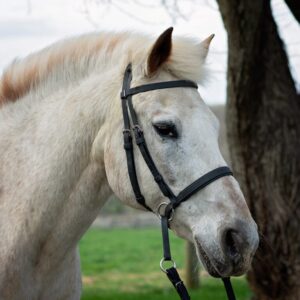
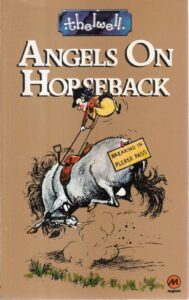 The senior instructor thought for a minute, then said, “Let them fail.” She did not mean, let the student become in any way unsafe, nor was she advocating a downer lesson. I wasn’t sure what she meant, really, other than maybe–???–allow some trial and error? I have much to learn. MUCH.
 mouth. She smiled and laughed and told the horse to stop and asked him to stop and told him he was supposed to stop.
 The lesson for me though, was that to not intervene, to let the horse be the teacher (within the dictates of safety), to trust that the student will eventually puzzle out the solution… that’s hard. That’s… hooboy. I’m not supposed to help, not supposed to fix anything, not going to fix anything by controlling the outcome?
 I’m pretty sure that if not for texting, I wouldn’t hear from my thirty-five year old daughter much at all. She loves me, she misses me, she wants to keep in touch, but email and phone just don’t work for her. So I get the occasional cheery text, or short update, and sometimes we even get a little text-conversation going (I refuse to refer to it as a thread). In an emergency, she will answer the phone if she sees it’s me, but I got word that I was to be a grandma by… text.
 The back and forth of texting is stilted, and particularly in groups, gets out of sequence easily. But Millennials and younger people apparently prefer texting, so I grump along mostly in silence.
 I find these reasons ridiculous as applied to friendly texts (I can tolerate practical texts along the lines of: Running 5 min late, see you soon.) If you’re going to blow up a friendship over the use of a word here or another word there, it wasn’t much of a friendship. If you think emojis are more precise and nuanced than your tone of voice and facial expressions, you delude yourself. To my mind, all the justifications for texting come down to: Communication is hard, good communication harder and even scary. We’re so afraid of each other, we’d rather tiptoe through texting than do the hard work of communication.
 I can cite you