


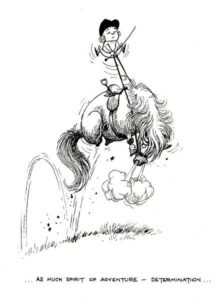
 A horseback riding concept that some students struggle with is the “return to neutral.” The idea here is that once you’ve asked your horse to do something–trot, turn, stop–and the horse shows an intent to comply with the request, stop asking. Go quiet. If you were nudging with your calves or tugging on the reins, cease. Cease applying pressure on the horse’s sides, on his mouth, on his mind. He did what you told him to, now reward him with peace and quiet (or a bit of praise) while he does his job.
For riders who have problems maintaining focus, or who have abundant physical energy, or who deal with sensory processing issues, the concept of a listening, physically passive state is hard to grasp and harder to find. Neutral is not something you can get to by “achieving.” The road to neutral has more to do with allowing, pausing, silencing, and trusting.
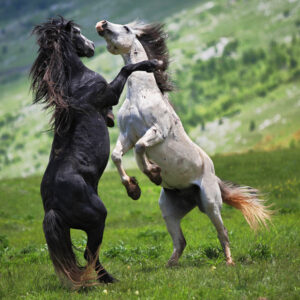 I can’t get to neutral on a horse who is scaring me. Nopity-nope. If Thunderbolt is dancing around, snorting, propping, and muttering bad-horsey words with his back feet, I will probably be sawing on the reins, thwopping him sideways with my leg, and muttering a few words of my own. A really accomplished rider can transcend the tantrum of the moment and ride chilly–ride without getting into a power struggle–even as they chide, discuss, or suggest to the horse that this behavior gets us nowhere.
The accomplished rider is always one instant away from neutral.
I used to find that commuting to and from the law office helped me get to neutral. The drive was familiar, mostly rural, and just long enough that I could settle my nerves and breathe. I drove in silence, without companions, and that suited me splendidly.
 Now, I need time by myself at home to get to neutral, preferably entire days of it. I can be plenty busy on these days (looking at you, Joshua Penrose), but intrusions are few and quiet, and usually by email rather than a text or call. The only expectations on me are my own. Give me a few of these days every week, and I can sally forth to volunteer at the barn, tag the errands-and-appointments bases, and even (!!!) do some social meals.
Deprive me of my back-to-neutral days, though, and I am progressively easier to upset, increasingly negative, and less and less fun to be around. My mother found her back-to-neutral in long walks by the sea. Other people seek it by putting their hands in the dirt, and still others just need a good, meaty crossword puzzle. None of this makes the “official list of self-care activities” that some expert can charge us for, and that’s probably wonderful.
How do you get back to neutral, and has your strategy changed over time?
 During my month off, it was my unhappy privilege to attend the funeral of friend’s father. I’d known Thomas for years, and when I bought this house, Thomas was my first yard guy. He’d show up every spring, bring order to chaos, and gently argue Mother Nature into semi-submission year after year.
 Before we talked price, the guy of the moment would assure me that Johnson grass will be the death of civilization and the harbinger of enormous fines from the weed control officer (whom I have never once seen, much less met in 35 years at this location). The barn roof was about to collapse. That Norway maple was due to fall on the house (and on my bedroom in particular) after the next heavy rain. The well pump was so far out of warranty (because I don’t buy warranties in the usual case) that oh, geez, lady. You’d better fill the bathtub now.
 Then they’d quote me some exorbitant number, and start adding to it. Well, if you want us to take the brush and logs away after we cut down the tree, that’s going to be extra. If you want weed whacking in addition to mowing, extra. Windows that are sealed, extra…
 And part of the reason I was so angry (and maybe am so angry?) is because Thomas, my first yard guy, was not like that at all. He was hard-working, took pride in what he did, asked a reasonable price, never shirked, never tried to make routine property maintenance into a grand opera, and was happy with sincere thanks and timely payment.
 I had been writing for a few years when I crossed paths with an old hand at the published author game, and she warned me: Don’t be too quick to quit that day job. You might find your productivity actually drops when you do.
 My writing productivity didn’t drop when I closed the law office, but it didn’t go up either. About that time, I ran across another old hand at the writing game, and their lament was, “I have picked all the low hanging fruit. I wrote all the clever openings and brilliant twists I’d stored up ten books ago. My inner critic has become more and more discerning, and with every book, I use up fascinating factoids or little character quirks that I can’t use again. This is getting harder, not easier!”
 That said, a hard writing day is better than almost any lawyering day, by my lights. Even so, I think about how to keep the joy percolating, how to entertain readers with the best yet, how to twist the twists and the tropes.
 of the specifics, but the concept of openness landed in my ever-questing imagination like a klieg light sweeping through a moonless night. Oh, yeah. THAT feeling. That curious, trusting, exploring feeling that I haven’t felt in a long, long time. Maybe I need more of that, if the next hundred books are to be as joyful and interesting to write as the last hundred have been. Yeah. Maybe that.
 This week was rough. I bit off a lot in terms of time and energy commitments, and while I wasn’t physically overtaxed, my zest for the day took a progressive hit as the week went on. By Friday, my humor, detachment, perspective, and other coping mechanisms were flagging.
 The day was not done with me, because yet a third interaction went widdershins. Regarding this incident, I have some apologizing to do. I went about solving what I thought was a problem, but nope. I was barging in without authority–anybody viewing the evidence objectively would come to that conclusion–and I need to do what I can to mend fences. The road to hell and all that.
 One quality of a slower, more relaxed pace of life is that my emotional buffers aren’t as frequently cleared simply because the next thing on the agenda has rolled onto center stage. I can fret and stew more, and this is not good. My mom would say to simply put the bad day behind me, and then my dad would make her one of his universal remedy double martinis.
 mowing down all in our path, and leaving an uneven swath of chopped grass, whacked tree roots, and flying sticks in our wake.
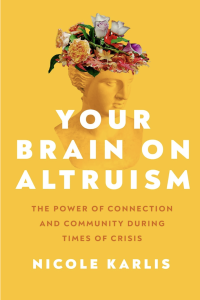 I am reading a lovely little book,
 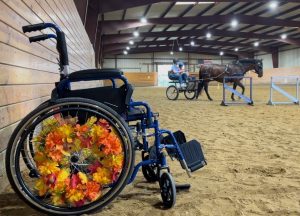 Clearly, I have some issues, or maybe some biases rooted in experience. In any case, at
  So we show up, and whether staff is delayed by traffic or on hand early, we know what’s expected of us. Get out the mandala board, fill water bottles, assemble tack for the assigned horses, if there’s time we might do a pre-groom for any equines who indulged in a recent mud bath. The kids show up and we move into the next phase of the morning. We have protocols to follow unique to our program, along with inside jokes, informal routines, and a little check out ritual that can turn into an interesting postmortem,
 And then there’s the plain old sense of camaraderie.
 I am now the proud owner of two spendy little hearing aids that actually fit. This took some doing. When the nice man passed me over the first pair and showed me how to put them in, I told him immediately that they were uncomfortable.
 Four days later, I was a cussin’ old bat. The nice lady from the hearing aid shop front desk texted to see how things were going, and she got an earful. Both ears were seriously sore, to the point that I could not wear the dratted things at all. The scheduler got me back in there, pronto, and the same nice man explained that I had very small, twisty ear canals (the same ear canals I’d had the other six times he’d looked at them), and I needed smaller equipment.

 Horses bring me joy. When I was a kid, books brought me joy too. I was always reading (easier to do when there’s no TV, and in later years, no TV on school nights). I was also outside in nature a very great deal, and much given to solitude because the only other girl near my age in that neighborhood–my sister–kinda got tired of playing Barbies with me by the time I hit elementary school (I was tired of her too, though even my Barbie was usually on a horse borrowed from my brother’s Johnny Quest).
 I know a lady who has a one month old daughter and an eighteen month old son. She has her groceries delivered, though it costs a little more. No meltdowns in the produce section, no fussing with car seats in the pouring down rain. No having to pull over and produce a bottle or two lest the heavens be sundered by audible evidence of infantile hunger pangs.
 As a warp nine introvert, I need a lot of solitude. Being around people, even my favorite people in the whole world, saps my energy. And yet, solitude can become isolation, and that–for me–has downsides. When I don’t have to make small talk at the post office, when I no longer know the check-out staff at my fave grocery store by name, when the simple courtesy of holding the door for somebody carrying packages isn’t part of my day… I lose both a sense of connection to my local community and opportunities to casually accommodate that community.
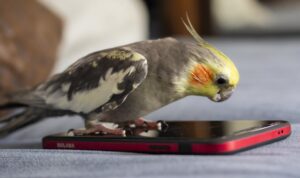 To the extent screens preserve us from the inconvenience of in-person encounters in our various village squares, screens might also be making it easier for us to dehumanize, ignore, and resent one another. Screen addiction might make it very easy to divide us from people with whom we really have much in common. This has been one of my pet theories, at least, when confronted with one of my siblings foghorning about how technology keeps us all so wonderfully connected.
 and to feel connected to genuine strangers (Taylor Swift, Benedict Cumberbatch), but screens cut out that middle orbital of neighbors, casual acquaintances, and “repetitive strangers,” like the checkout ladies and Tuesday morning library patrons.
 As I was growing up, my family did not take vacations. Logistics were an issue. How do you get nine people and all their luggage into one car? How do you stop World War III from breaking out in the way-back of the station wagon? Once the big kids peeled out of formation, we did spend some summers in San Diego while my dad took sabbatical leave at UCSD or Scripps.
 Why is this on my mind? Because I am happy to report that Lord Julian’s tenth tale, A Gentleman in Possession of Secrets, is complete in draft. Yay, yippee, yahoo, and gaudeamus igitur! This moment in the writing process, when the manuscript is complete in draft, is nonetheless always a little fraught for me. On the one hand, I feel great relief. I know once I have the first draft, I can make a book out of it. Phew!
 That maybe, for a couple of weeks or so, I am NOT supposed to write, strikes me as preposterous. Writing is what I do. I am a writer. I love to write. The idea that I will create better books if I focus instead on my flower beds right now feels like blasphemy and darned risky. To suggest that I will come up with a really interesting pair of protagonists if I test ride some lease horses. (Did I just write that!?) feels absurd.
 I’m pretty good a micro-indulgences, like the perfect cup of tea, a bouquet of yard flowers, or good book, but I have fallen out of the habit of travel to Scotland or Ireland, big writing retreats, or transcontinental road trips. The pandemic has something to do with my narrowed appetite for rejuvenation, but looking at my parents, I suspect the Depression, the Potato Famine and even the
 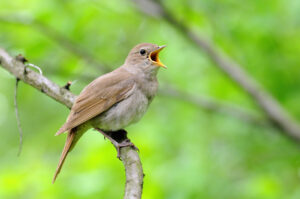 I thought the songbirds were swerving my property because I have a lot of cats. Or maybe bird flu got here a while ago and we’re only just noticing it. Maybe I stopped hearing the birdies first thing in the day because migration patterns are changing due to light pollution and loss of habitat.
 The hearing aids are an adjustment–they make my own voice louder, so I’m tending to speak too softly. I’ll get over that, and I’ll learn which settings work best for which environments. They are uncomfortable, but I’m assured the discomfort fades with regular use. I might need child-sized devices, which we can sort out if necessary.
 Recent
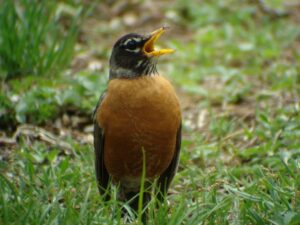
  I bash for-greed medicine all the time, and these hearing aids were very, very expensive. But they work reasonably well, they are not obvious to the casual observer, and they gave me back the time of the singing birds and the music of my little rural stream. I am beyond grateful that I could afford them (for now), and every time I step outside–to take out the trash, to fetch the groceries from the car–I hear the birds singing, and I have a reason to stop and simply rejoice.